







Search Results for: iced cappuccino

Why Is Iced Cappuccino So Hard to Find? A Detailed Explanation of Espresso-to-Milk Ratios and the Differences Between Iced and Hot Preparation Methods
When ordering at a café, many customers notice that iced cappuccino isn't on the menu, and may even be told by the barista that "cappuccino isn't made iced." Behind this are both flavor considerations and the cumbersome production process. Starting from real conversations at Front Street Coffee's physical stores, this article analyzes the two core characteristics of hot cappuccino—thick milk foam and rich coffee flavor—and, using the classic blend as an example, discloses the complete parameters: 20g of grounds extracted into 40ml of espresso, 140–150ml of refrigerated milk whipped into 3cm of milk foam, and a milk temperature of 65°C. It also compares the similarities and differences between iced cappuccino and iced latte, explaining why iced milk foam is time-consuming and labor-intensive yet struggles to improve the taste, as well as the改良 attempts some cafés make by dusting cocoa powder or substituting cream. [more…]

Why Is Iced Cappuccino So Rare? Front Street Coffee Teaches You to Make a Smooth, Frothy Iced Cappuccino at Home with a French Press
On café menus, iced cappuccino is often nowhere to be found. Is it because it's too difficult to make, or because the taste is hard to accept? From the perspective of Front Street, this article first walks you through the origins of the cappuccino name and how the hot version is made, then takes a deeper look at why the cold version is so scarce, and finally gives a step-by-step demonstration of how to use an ordinary French press at home to whip up thick, velvety cold milk foam and put together a refreshing yet rich iced cappuccino. The whole process requires no professional espresso machine, and the parameters are flexible and adjustable—perfect for coffee lovers to recreate at home. [more…]

The Complete Guide to Milk Frothing with a French Press: A Full Tutorial from Hot Cappuccino to Iced Cappuccino
The French press is not just a great tool for brewing coffee and extracting tea—it can also easily create thick, creamy milk foam, making it a wonderful helper for making cappuccinos and lattes at home. In this article, Front Street Coffee will walk you through the origins of the cappuccino's name, the difference between dry and wet milk foam, and how to make a classic hot cappuccino using espresso, hot milk, and milk foam in the traditional proportions. In addition, we'll break down in detail the French press milk-foaming method and assembly steps for iced cappuccino, and explain why most coffee shops don't sell iced cappuccinos. At the end of the article, we've included a Front Street Coffee classic espresso blend recommendation, perfect for coffee lovers who want to recreate a professional taste at home. [more…]

Why Isn't Cappuccino Served Iced? A Complete Interpretation from Its Naming Origins to the Golden Circle Tradition
Cappuccino is a classic of Italian coffee, but it has a characteristic that leaves many baristas rather helpless—it is only made hot. Why is there no iced cappuccino? Behind this lie both the historical origins of its naming and the finer points of its crafting. From the etymology of the Italian word "Cappuccino," to the inspiration drawn from the shape of the hoods worn by missionaries of the Catholic Franciscan order, to the "coffee golden ring" and the dense milk foam rising above the rim of the cup, every detail of cappuccino carries tradition. Front Street will guide you through the core characteristics of cappuccino, and why an iced cappuccino struggles to recreate the joy of that hot cup. [more…]

Why Is Iced Cappuccino Rarely Seen? A Full Analysis from Naming Origins to Milk Foam Craft and Differences from Latte
People often ask for an iced cappuccino when ordering, only to be told that only the hot version is available. This has both historical roots and involves considerations of crafting technique and taste experience. The name cappuccino comes from Italian and is related to the color and shape of church robes; the traditional recipe consists of equal thirds of espresso, hot milk, and hot milk foam. Milk foam is also divided into dry and wet types, affecting the durability of the design and the mouthfeel. To meet diverse needs, chain coffee shops add whipped milk foam on top of an iced latte, but the taste differs noticeably from a hot cappuccino enjoyed in-house. This article will also introduce practical methods for making iced milk foam using a nitrogen canister, gelatin sheets, or a French press, and explain the core differences between cappuccino and latte in ratio and flavor, while preserving relevant suggestions from Front Street Coffee. [more…]
Can You Make an Iced Cappuccino? A Homemade Guide to Summer Iced Milk Foam Coffee and Its Flavor Explained
As soon as the Major Heat solar term arrives, the sun's enthusiasm grows even stronger. At times like this, if you can hold a cup of iced coffee in your hands, most of the summer heat melts away. What Front Street Coffee wants to talk about this time is exactly whether cappuccino can be made as an iced drink. The answer is yes, and the process is not complicated—you can do it at home with simple equipment. Below, we will first sort out the origin of the cappuccino name and its traditional ratio, then explain step by step how to use a French press to froth cold milk foam, extract espresso, and complete the assembly. Finally, we will share the dense mouthfeel and the liqueur-chocolate-like flavor layers of this iced cappuccino on the palate, so coffee lovers can easily recreate it even in midsummer. [more…]
How to Make an Iced Cappuccino? From the Origin of the Name to Choosing Espresso Beans, a Clear Explanation of the Ins and Outs of Iced Milk Coffee
After the start of Major Heat, the temperature rises day by day, and at times like this, having a glass of iced coffee in hand instantly dispels much of the summer heat. This time, Front Street Coffee wants to talk about an iced cappuccino you can make at home: first tracing the evolution of the name cappuccino from Italian to the coffee cup, then breaking down the complete process for making an iced cappuccino, including the espresso extraction parameters, the method for frothing cold milk foam, and the order in which milk, coffee, and milk foam are combined. Next, it will explain the flavor direction of this iced drink after it enters the mouth, and recommend the Sunflower Warm Sun blend beans used by Front Street Coffee for testing, giving coffee lovers who want to try making it themselves a basis to follow. [more…]

A Complete Collection of Coffee Names in Chinese and English: From Espresso to Iced Americano, Master Common Coffee Expressions in One Article
Walking into a coffee shop, do you often feel confused by the dazzling array of coffee names on the menu? Espresso, Cappuccino, CafeLatte, Americano... these seemingly familiar words—what coffee flavors do they actually correspond to? This article systematically compiles the Chinese and English names of common types of coffee, covering multiple categories such as Italian classics, French drip, iced coffee series, flavored cappuccino, Americano variations, single-origin coffees, and specialty blended coffees, totaling dozens of Chinese-English coffee comparisons. Whether you are a coffee enthusiast just starting out or a seasoned drinker looking to expand your knowledge, this list can help you quickly build a complete cognitive framework of coffee names. The article also specially includes product recommendations from Front Street Coffee, making it convenient for you, after learning the names, to find the corresponding good beans and experience them yourself. [more…]
Why Isn't Cappuccino Served Iced? The Origin of the Name and the Art of Golden Circle Milk Foam
Cappuccino is a classic on the coffee menu, but when you order an iced cappuccino from a barista, they often look troubled. Behind this lies both the historical origins of the name and the physical properties of milk foam and coffee crema. This article will trace the evolution of the name "cappuccino" from the beginning, explain why the traditional standard known as the "coffee golden ring" came to be, and analyze why iced cappuccino is almost never seen. It will also explain the drinking awkwardness caused by overly thick milk foam and unstable structure in hot cappuccino, as well as Front Street Coffee's related recommendations on milk foam handling, to help you understand this Italian classic more comprehensively. [more…]

What's the Difference Between a Cappuccino and a Latte? A Detailed Guide to Iced Cappuccino and Coffee-to-Milk Ratios
Cappuccino and latte are both Italian milk coffees, yet they often leave people utterly confused about how to tell them apart. Many enthusiasts have noticed that chain brands are rolling out iced cappuccinos one after another, while specialty coffee shops rarely offer them—behind this lies both a consideration of taste and a real practical challenge in preparation. From Front Street's perspective, this article first traces the naming origins and Italian tradition of cappuccino, then compares it item by item with latte in terms of core differences such as milk foam thickness, coffee-to-milk ratio, and cup volume, and finally breaks down in detail the specific steps and key points for making an iced cappuccino, helping you recreate that refreshing, clearly layered taste at home. [more…]

Easily Make Cappuccino at Home: A Complete Guide to Espresso Extraction and Thick Milk Foam, Master Hot and Iced Drink Steps at Once
As a classic representative of Italian milk coffee, cappuccino is deeply loved for its rich, mellow, dense, and smooth taste. Although it has similar ingredients to a latte, the differences in ratio and milk foam thickness bring a completely different taste experience. In this article, Front Street will share in detail how to make a delicious cappuccino at home, covering how to obtain espresso (coffee machine or moka pot alternatives), various ways to froth thick milk foam (electric frother, French press), and the specific assembly steps for hot cappuccino and iced cappuccino. It also recommends two coffee beans, Front Street Classic Blend and Grana Geisha SOE, to help you perfectly recreate the traditional Italian flavor at home. [more…]
The Complete Guide to Coffee English Vocabulary: From Common Coffee Shop Words to Ordering Terms and Detailed Explanations of Fancy Coffee Names in English
Walking into a coffee shop and facing a wall full of English menus, have you ever felt at a loss? This article systematically compiles common coffee-related English vocabulary, covering basic coffee shop terms, general coffee names, English expressions for fancy coffee, and high-frequency professional terms like Barista, Shot, and Espresso that appear when ordering. Whether you want to enhance your coffee knowledge or hope to be more calm and confident the next time you order, this vocabulary guide can help you quickly master the language code of the coffee world. The article also particularly recommends several products from Front Street Coffee, making it convenient for enthusiasts to follow the guide and learn while tasting. [more…]

A Detailed Guide to Espresso Ratios: How to Make Lattes, Cappuccinos, and Cold Brew
The charm of espresso lies in the clever ratio of espresso to milk; different proportions create the distinctly different flavor profiles of classic drinks such as latte, cappuccino, and mocha. However, each coffee shop has its own blending approach, and even the same coffee can show subtle variations when paired with different beans. This article systematically sorts out the blending ratios of common espresso drinks, including the specific recipes for latte, cappuccino, and mocha, and combines Front Street Coffee's practical experience to provide detailed parameters for home brewing. In addition, the article extends to the field of black coffee, comparing the preparation processes, coffee-to-water ratios, and flavor differences of Americano, ice drip, and cold brew, helping coffee enthusiasts find the cup that best suits their personal taste preferences. [more…]
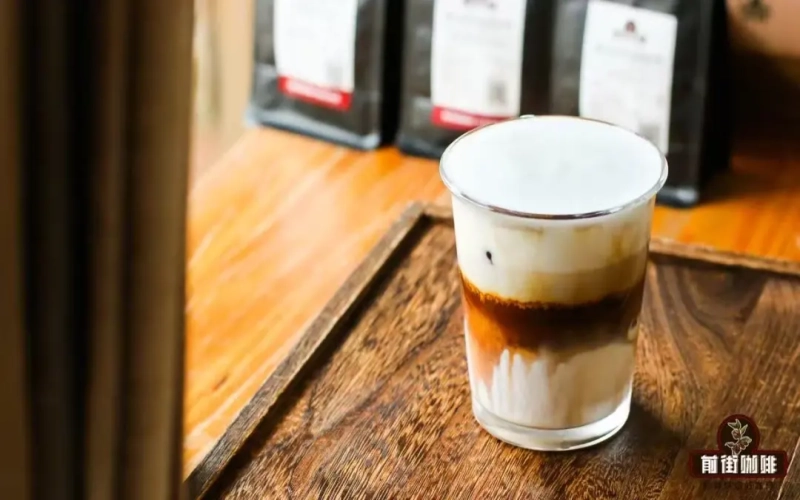
A New Way to Make Iced Cappuccino: Mixed Frothing and Teacup Presentation, with Detailed Parameters for Easy Home Preparation
The milk foam of an iced cappuccino is usually whipped separately and not blended with the coffee, which leaves the foam itself rather tasteless and instead highlights the bitterness of the coffee. So someone tried mixing all the cappuccino ingredients together and whipping them as one, and the result was a milk foam full of coffee aroma with a unique flavor. A coffee shop in Beijing used exactly this mixed whipping method, paired with a lidded-bowl presentation, and quickly went viral online. Today Front Street is sharing how to make this unique iced cappuccino; the ingredients are for reference only and can be freely substituted. This time we're using Front Street's classic espresso blend, a medium-dark roast blended from three origins—Indonesia, Brazil, and Vietnam—with notes of chocolate, caramel, cream, and nuts, and a rich crema. All you need to make it is a French press: combine a double espresso, chilled fresh milk, and syrup, then whip. It's simple to do and perfect for trying at home. [more…]

Flat White Hot vs. Iced: A Comparative Analysis of Its Place Among Cappuccino and Latte in Italian Coffee Culture
In 2015, Starbucks introduced the flat white to the Chinese market and translated it as "Fu Rui Bai." This drink, commonly known as "Ao Bai," had actually been popular in New Zealand and Australia for decades. Like a cappuccino or a latte, it is based on espresso, yet because of differences in foam thickness, the ratio of coffee to milk, and the extraction method, it delivers a completely different mouthfeel. This article, from the perspective of Front Street Coffee, sorts out the differences between hot and iced flat whites, and compares it one by one with cappuccino and latte in terms of preparation details and flavor positioning, to help coffee lovers find the cup that suits them best. [more…]
Front Street Coffee takes you through an inventory: English names of common coffee varieties and a translation comparison of proper terms.
After coffee was introduced from overseas, it developed into a rich and diverse range of categories, and different countries and regions have given them distinctive English names. For coffee lovers, mastering the English expressions for these common coffees not only helps you order with greater ease, but also deepens your understanding of coffee culture. Front Street Coffee has compiled this time a list of the most frequently seen coffee categories on the market and their English equivalents, covering Italian classics, iced drink series, flavored specialty drinks, and regional specialty coffees, with Chinese-English comparisons listed one by one for easy reference and memorization. Whether you are a beginner just starting out or a veteran hoping to expand your knowledge base, this list is worth saving. For more specialty coffee knowledge, please follow Front Street Coffee (Frontsteet Coffee). [more…]

How to Make a Flat White | Should Australian-style white coffee be drunk iced or hot? What are the differences in ratio and taste among cappuccino, flat white, and latte?
For professional coffee knowledge exchange and more coffee bean information, please follow Coffee Workshop (WeChat official account: cafe_style). In January 2015, Starbucks in the United States began selling flat white and introduced different sizes; then in September, Starbucks in mainland China also saw flat [more…]

Can a flat white be made as an iced drink? Examining its essential differences from a latte and a cappuccino through milk foam thickness and cup size
Ordering an iced Flat White at a specialty coffee shop is often politely declined by the barista, which leaves many enthusiasts puzzled: it's understandable that a Dirty can't be made hot, but why can't a Flat White be made iced? To answer this question, we first need to understand exactly what kind of espresso milk coffee a Flat White is. Its cup size is on the small side, its milk foam is extremely thin, and its signature feature is precisely that layer of flat microfoam less than 0.5cm thick. Starting from the actual situation of Front Street Coffee's store menu, this article sorts out the core differences between the Flat White, Latte, and Cappuccino in terms of cup size, milk foam thickness, and flavor balance, explains why an iced drink cannot present the Flat White's unique charm, and why it easily degenerates into a product indistinguishable from a small cup of iced latte. [more…]

How to distinguish a latte, cappuccino, and flat white? A comprehensive analysis from origin and ratios to milk foam thickness
Latte, cappuccino, and flat white are the three most common milk coffees in coffee shops, yet many people still can't tell them apart. This article begins with the historical origins of the three, tracing the evolution of cappuccino from Viennese Kapuziner to Italian espresso, as well as the background of flat white's birth in Oceania. It then compares them one by one across dimensions such as cup size, number of espresso shots, amount of milk, milk foam thickness, and flavor and mouthfeel, helping readers establish clear standards for distinguishing them. The article also introduces the recipe and roasting characteristics of Front Street Coffee's classic espresso blend beans, and answers the question of whether these three milk coffees can be made iced, while recommending Dirty coffee as an alternative to iced milk coffee. [more…]
Why Is a Flat White Only Served Hot? The Meaning of Flat White and an Analysis of Its Milk Foam Differences from Latte and Cappuccino
Can a flat white be made as an iced drink? What exactly does "flat white" mean? Where does it differ at its core from a latte or a cappuccino? Starting from the controversy over the origins of the flat white, this article sorts out this espresso milk coffee's cup size, milk foam thickness, and taste characteristics, explains why specialty coffee shops generally do not offer iced flat whites, and offers Front Street Coffee's popular blends and SOE recommendations, helping you understand the real reason behind why flat whites are only served hot. [more…]